
Meta Muse Code 101: The Complete Guide to Meta’s First Coding Agent + 25 Prompts

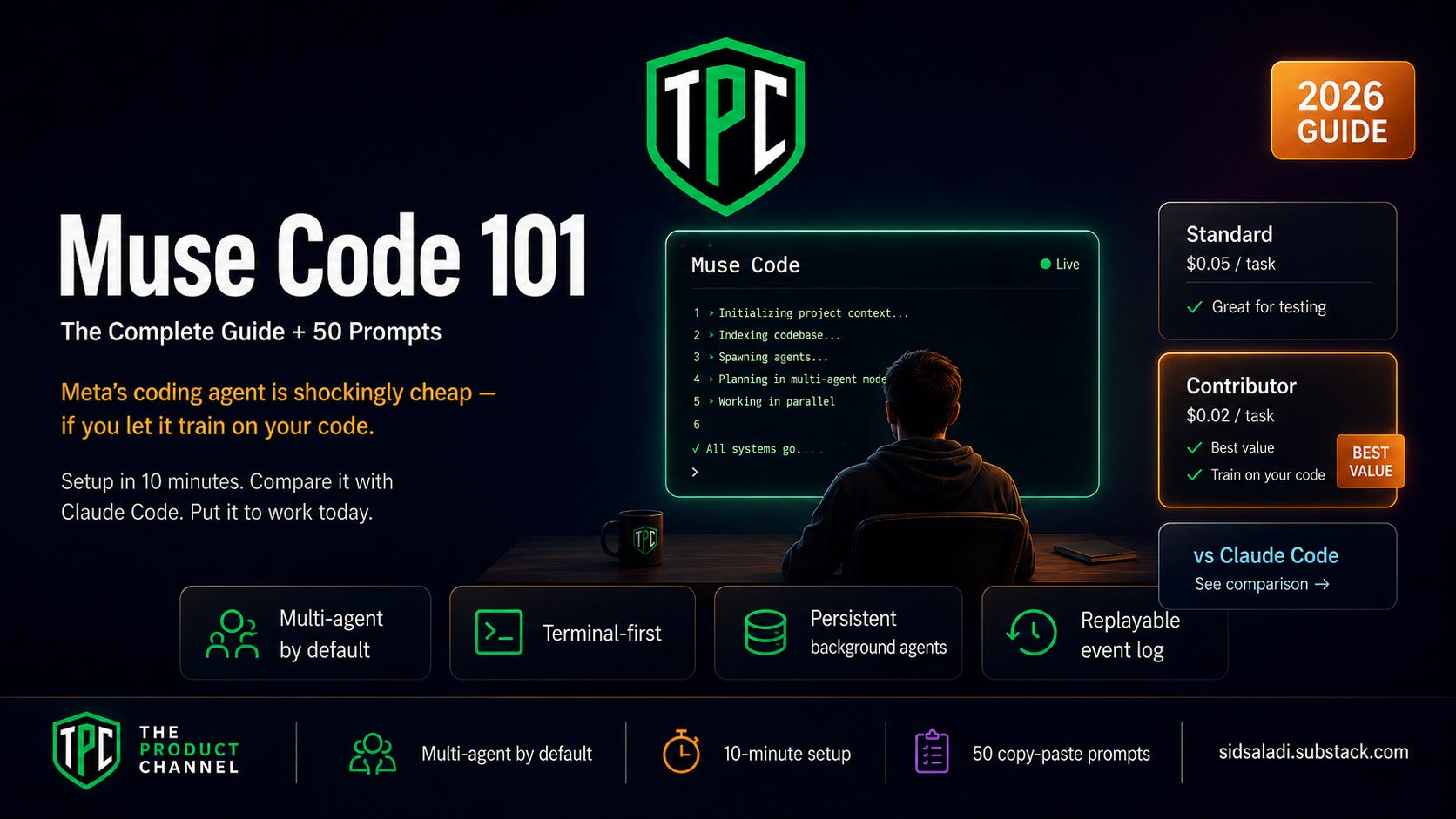
Meta just shipped a coding agent that pays you to use it.
Not with cash. With tokens so cheap they’re almost free — if you let Meta train on your code. That trade is the most interesting pricing experiment in AI right now, and most people are missing what it actually means.
Let me break down everything: what Muse Code is, how to set it up in 10 minutes, when to pick it over Claude Code, and 25+ copy-paste prompts to put it to work today.
🧠 PART 1: THE MUSE CODE 101 GUIDE
The Truth About Coding Agents Right Now
Let me tell you a truth. The coding agent market has been a two-horse race for a year.
Anthropic has Claude Code. OpenAI has Codex. Everyone else has been playing catch-up or getting acquired.
Meanwhile, prices kept climbing for anyone doing serious agentic work. Long-running tasks burn tokens fast. A single multi-hour refactor can cost more than your streaming subscriptions combined.
Then on August 5, 2026, Mark Zuckerberg announced Muse Code on X. Meta’s first real coding agent. Built by Meta Superintelligence Labs under Alexandr Wang.
Meta arrived late to this fight. But they brought a weapon nobody else has: a pricing model that treats your code as currency.
Here’s where it gets interesting.
What Is Muse Code (And Why Should You Care?)
Muse Code is a terminal-based coding agent that handles complete software engineering tasks across large repositories. It plans the change, writes the code, and validates the result.
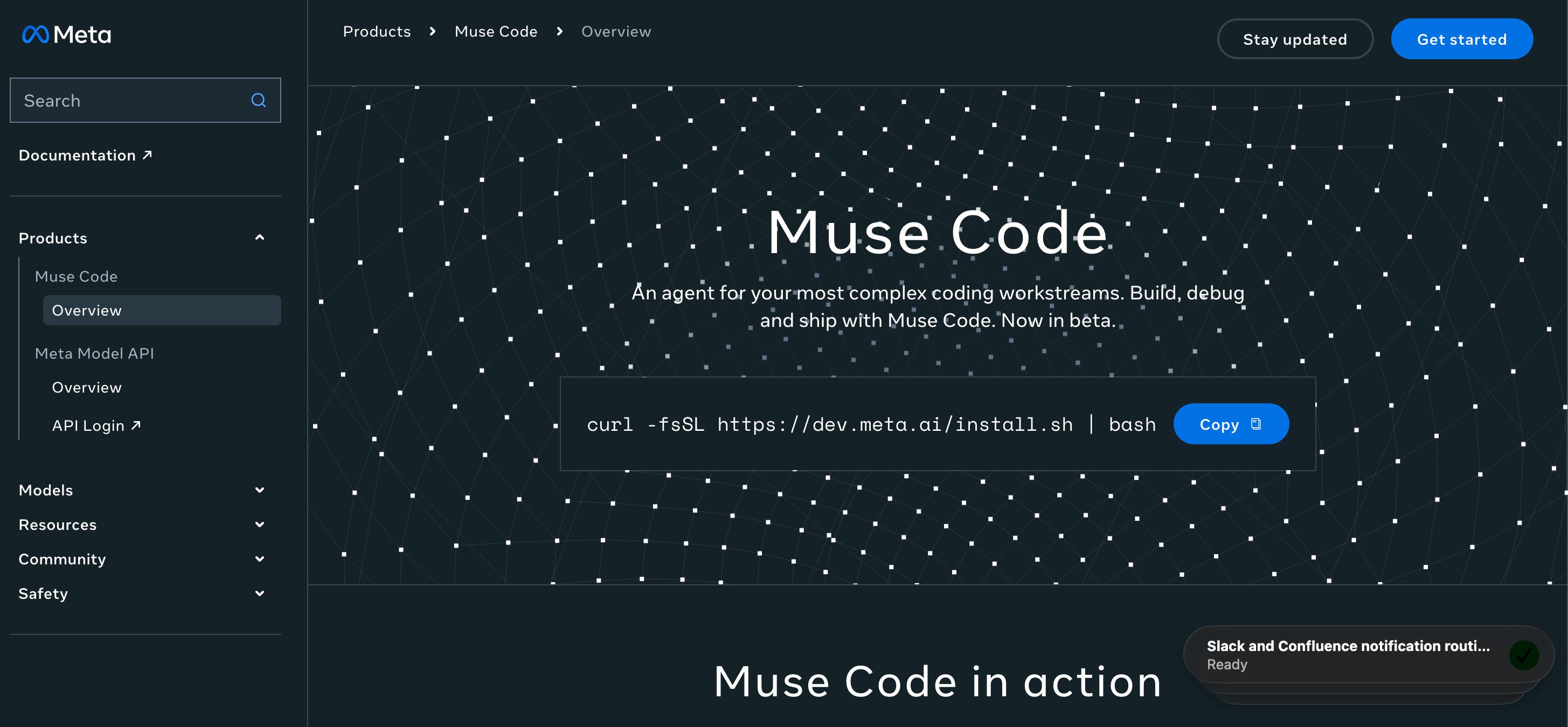
Think of it like hiring a contractor instead of a handyman. You don’t tell it which line to edit. You describe the outcome, and it figures out the plan, the work, and the quality check.
The quick facts:
Released: August 5, 2026 (public beta)
Runs on: Muse Spark 1.2 — a coding model Meta co-trained with the agent so the two fit together
Context window: 1 million tokens
Platforms: macOS and Linux, terminal only. No GUI, no native IDE plugin at launch.
Four things make it genuinely different:
1. Multi-agent by default. This is the architectural headline. Most coding agents are one brain doing one thing at a time. Muse Code runs multiple agents coordinating on every task — worker agents executing in parallel, reviewer agents checking quality in the background. Meta’s cookbook even ships a recipe that spins up a four-profile agentic team that turns a one-line product idea into a working SaaS app, and an “agent fan-out” pattern that puts subagents in isolated git worktrees so parallel work doesn’t collide mid-flight.
2. Persistent background agents. Related but distinct: Muse Code’s background agents stay alive for your whole session, not just one subtask. They gather information, carry out next steps, and decide when to report back to the main agent. Less waiting. Less babysitting.
3. The model and the harness were built for each other. Muse Spark 1.2 was co-trained with Muse Code — Meta tuned the model on trajectories from this exact tool, optimizing how it handles goals, context compaction, and subagents. That’s a different philosophy from “great general model, wrapper on top,” and it’s why Meta brands the agent “Built for Muse Spark.”
4. A replayable event log — fully auditable. Every model call, tool run, approval, and edit gets appended to a local log. This makes Muse Code replay-exact and restart-safe. If it crashes 3 hours into a task, it resumes from the point of failure. And you get a complete audit trail of what the agent actually did — in one internal Meta test, the model optimized GPU kernels across more than 1,000 tool calls and up to 24 hours of continuous work, every step logged.
The honest assessment: Meta’s own published benchmarks put Muse Code behind Claude Code (Opus 5) on every chart they showed. Full numbers below but the short version is Meta isn’t winning on capability. They’re competing on price, and that’s a legitimate strategy.
📊 The Benchmarks: Where Muse Code Actually Ranks
Credit where due: vendors don’t usually publish the chart where they come second. Meta published three of them. Here’s what their August 5 launch deck showed, with each model running in its own agent product:
Keep reading with a 7-day free trial
Subscribe to The Product Channel By Sid Saladi to keep reading this post and get 7 days of free access to the full post archives.